Cthulhu Wars sculpts
Ranked in order of personal preference
This is a list of the types of models from Cthulhu Wars that I have painted, in order of decreasing personal preference. I’m not rating my paint jobs but the design (shape) of the models before I painted them, purely on aesthetics.
The miniatures made for Cthulhu Wars shared a concept artist, named Richard Luong. However, according to Ian Brumby at Fenris Games, who oversaw the implementation of the first few crowd-funding campaigns, the miniatures were spread out among more than two dozen sculptors. They had varying tastes and levels of experience. Sculptor credits in this article are taken from the “Omega Edition” rulebook of the game, which is not comprehensive.
The Haunter of the Dark
Sculptor: Tidal 4.
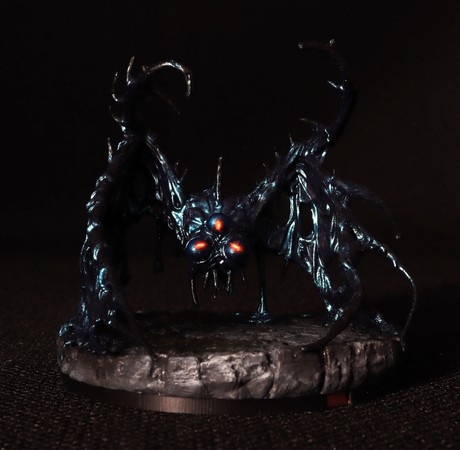
In first place, it’s an avatar of Nyarlathotep, and the least anthropomorphic one. I have no complaints about this sculpt, other than the thin extra-large base getting warped in production.
Nyarlathotep
Sculptor: Mark Evans.
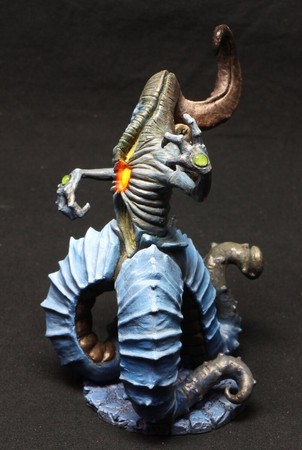
Same GOO, different avatar. From the Crawling Chaos faction this time, it’s the Bloody Tongue, though that term is not used in this game. In the spirit of good Mythos writing, this model combines naturalistic features from real-world biology—in this case exotic marine life—with more uncanny features, including a whirlpool of souls in Its open belly. It is gorgeous!
The Dark Young
Sculptor: Andrew May.
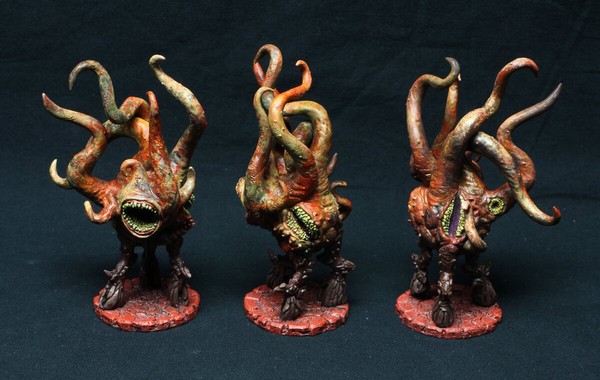
From the Black Goat, it’s a forest of twisted flesh. Always an imposing presence on the game board. In 2023, Ian Brumby said he was still selling a lot of these separately from the game, and I can see why.
Hastur
Sculpt not credited.
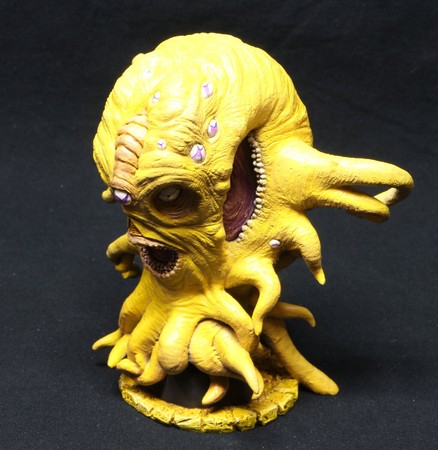
From the Yellow Sign, it’s The Unspeakable One! It’s huge in that dumb US way, it’s well produced, it has its fair share of Freudian vaginae dentatae, and it looks crazy cool with that wrinkly skin and mass of tentacles.
Ghatanothoa
Sculptor: Tim Prow.
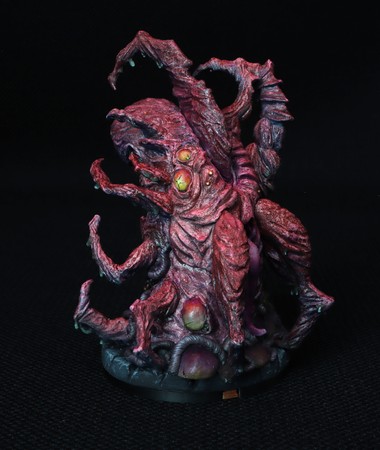
Complex and ambiguous, it’s even more vulval than Hastur, but it looks unable to move.
The faction-specific Ancients Acolyte
Sculptor: Tidal 4.

Instead of being out of place with the rest of the faction, the dieselpunk look of this figure ties the faction together, which is a feat.
The Abominations
Sculptor: Jo Brumby.
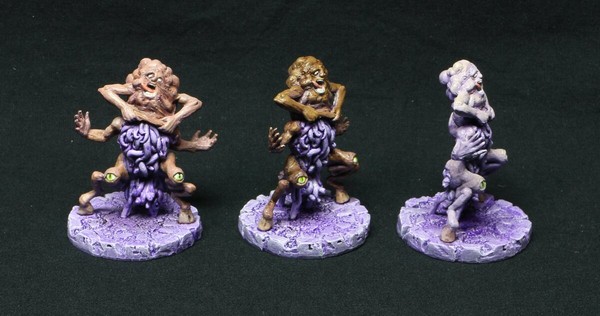
From the Opener of the Way, it’s the sweet spot between the Mutants and the Spawn of Yog-Sothoth. These poor bastards are walking heavy-metal album covers.
The Gnoph-Keh
Sculptor: Stephen May.
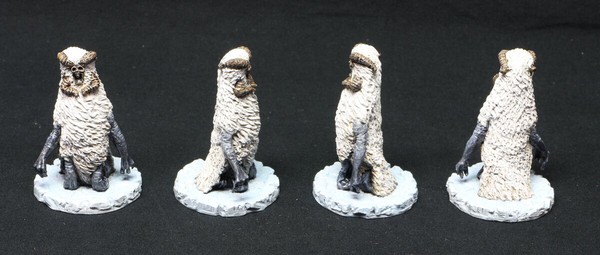
From the Windwalker, it’s just eerie silence crouched in matted fur. A simple design including a distinctive silhouette, the Gnoph-Keh come with enough details to be fun, too.
Abhoth
Sculptor: Tim Prow.
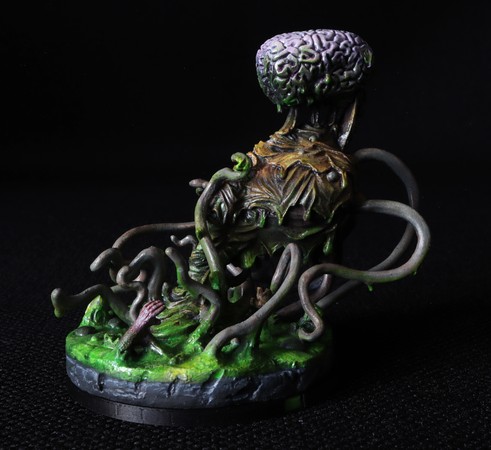
A giant floating brain on a bare spine in a formless body clad in rags, with a bunch of tentacles, in a pool of acid out of The Blob (1988), complete with the hands of melting people that are not to scale with human hands in the game. It’s goofy, but not in the googly-eyed, Miniony way of the Chaos Gates.
Shub-Niggurath
Sculptor: Kev Adams.
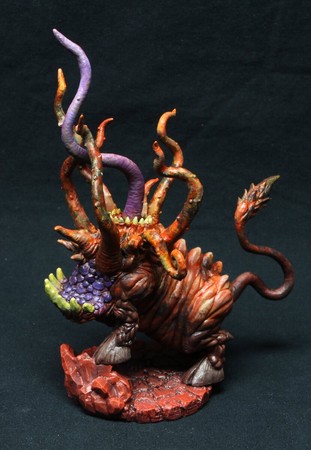
From the Black Goat, it’s the Goat Herself. A fine complement to the Dark Young, but more goofy, with rounded teeth in a pronounced underbite, and a dainty hoof on a tactical rock.
Ithaqua
Sculptor: Neil McKenzie.
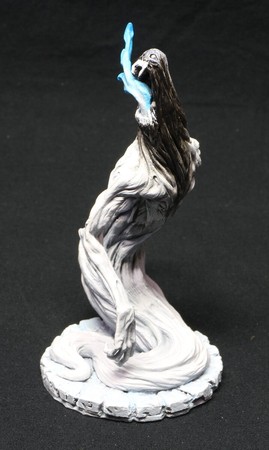
From the Windwalker, it’s a liquid storm person. So much character in this one, but just a tiny bit too anthropomorphic.
Azathoth
Sculptor: Mark Evans.
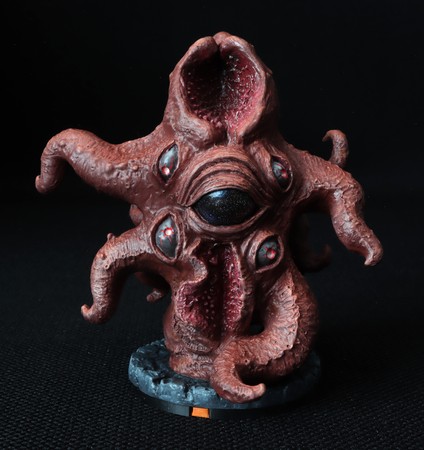
Evans managed a profoundly organic look here that would have been a lot more plausible in marine biology than the Bloody Tongue, but it’s also more vulval than Ghatanothoa.
Synthesis
Sculptor: Taras Strannik.
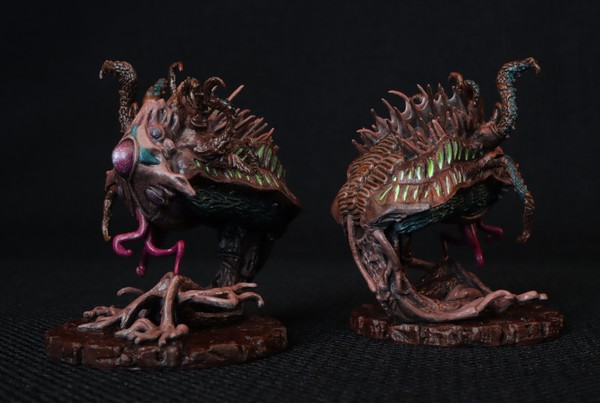
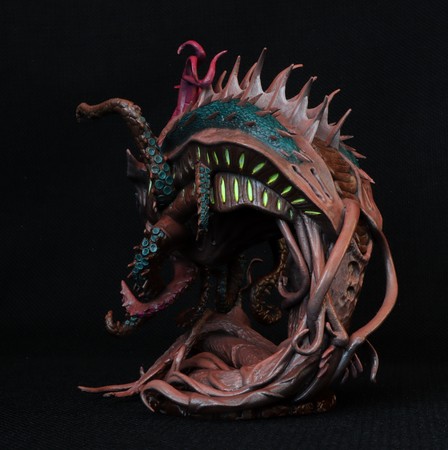
In the sculpting credits, the main Synthesis figure is referred to as Dire Azathoth, because it started as a neutral unit, but as Synthesis it’s aligned with Daemon Sultan. Like “Dire” Cthulhu, who is not shown on this page, the most obvious thing about its design is that it’s impractically large. I like that it’s more alien than Mark Evans’s older, neutral Azathoth, but the digital sculpt doesn’t have as much character. The smaller Larvae are better.
Rhan-Tegoth
Sculptor: Sonny Bundgaard.
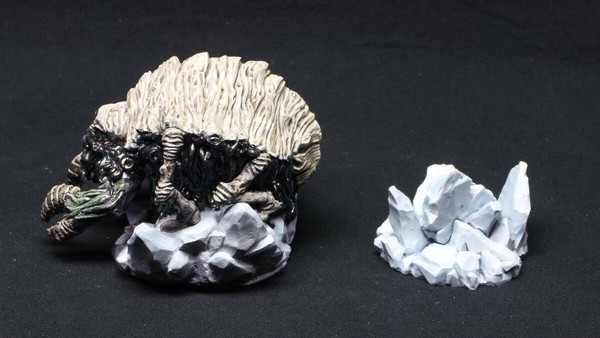
Bonus iceberg sculpted by Ian Brumby
From the Windwalker, it’s a crab somebody saw in a museum once. Like Nyarlathotep, it’s got the right mix of naturalism and weird horror.
Byatis
Sculptor: Jo Brumby.
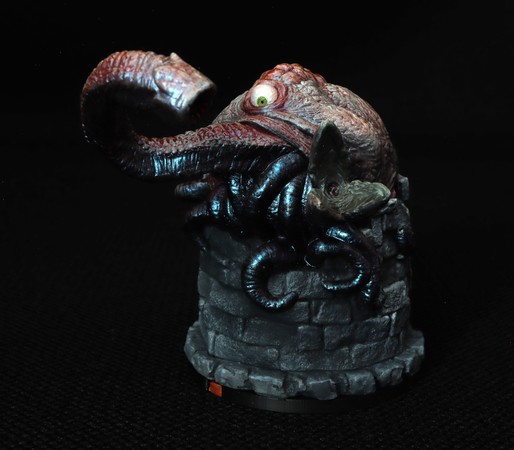
This is one case where the obvious cuteness and silliness of the sculpt feels appropriately subdued yet demands recognition.
The Cats from Uranus
Sculptor: Martin Nikolov.
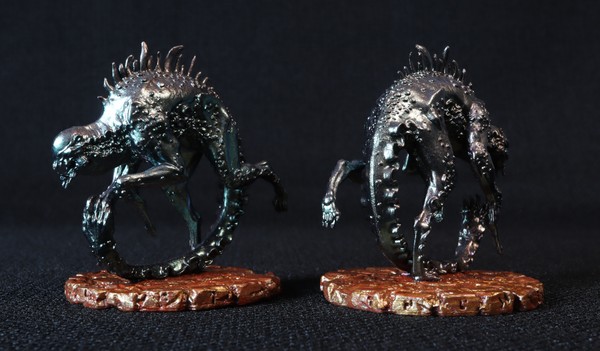
From Bubastis, it’s a cat with a joke name. I sense an Alien (1979) influence here that came out better than the Hound of Tindalos. The fronds on the tail are nice.
The Formless Spawn of Tsathoggua
Sculptor: Neil McKenzie.
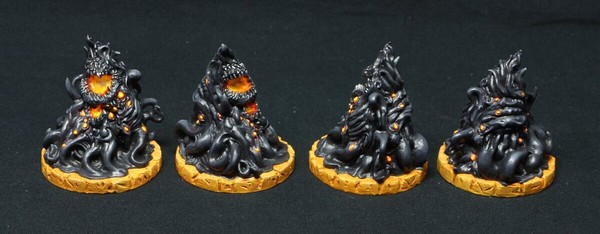
From the Sleeper, it’s the kids. Of the many “formless” monsters in the game, these look the most interesting.
The Reanimated
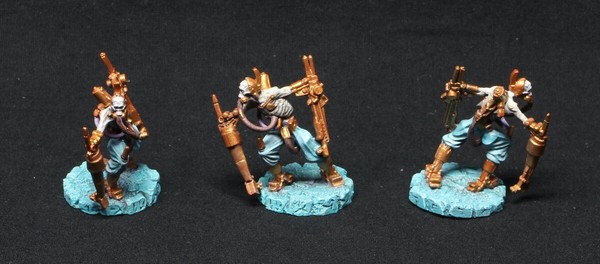
From the Ancients, it’s the half-mechanical slaves made out of humans. The machine parts are generically greebled but the overall effect is very good.
Antithesis
Sculptor: Valerio Carbone.
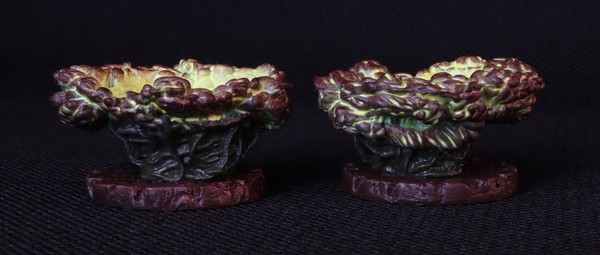
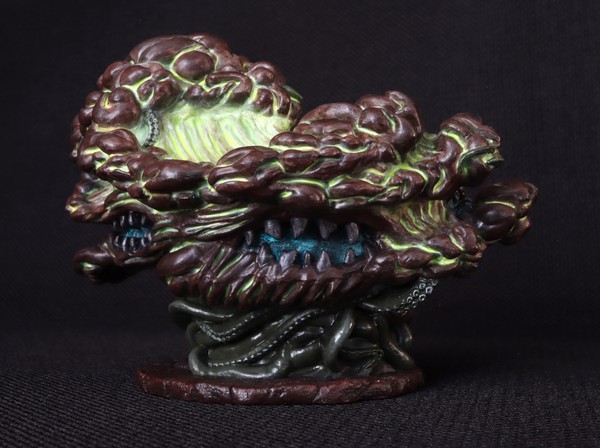
It stands out, and it’s fun to paint, but even with the base I added, Avatar Antithesis has high potential to block items on the game board from view.
The Leng Spiders
Sculptor: Tim Prow.
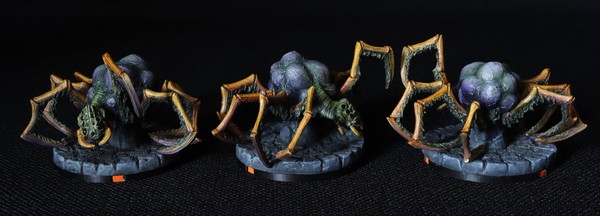
These are comically large in relation to their importance in the game. They’re the only type of figure that get an entire neutral-creature box to themselves, which means I had to CAD a variant of the box with only one slot for a rule sheet. They look nice though.
Yog-Sothoth
Sculptor: Mark Evans.
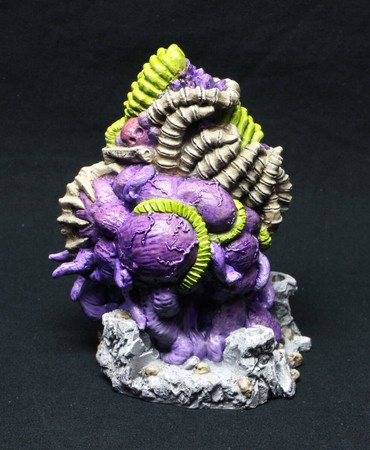
From the Opener of the Way, it’s the All-in-One and One-in-All. There’s a good Akira (1982) vibe to this sculpt, seeming to swell with power beyond meaning.
The Fungi from Yuggoth
Sculptor: Jo Brumby.
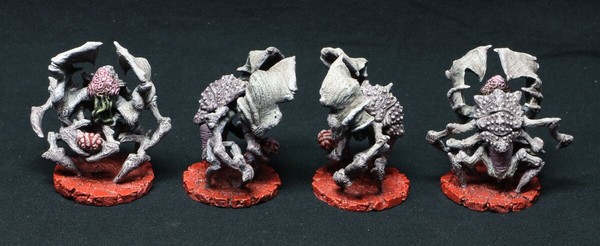
From the Black Goat, it’s the Mi-Go! They’re not how I imagine Lovecraft’s creatures, and they’re certainly bigger than the ones in Vermont, but Lovecraft did say there are many varieties.
The Star Vampires
Sculptor: Tim Prow.
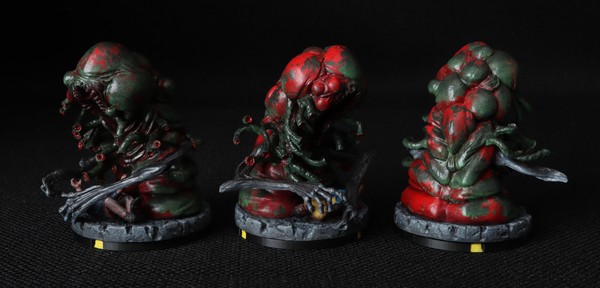
These are supposed to be invisible, which is a challenge to sculpt and to paint, especially when you’re not using a transparent resin. That’s not a problem with the sculpt though. I would not have preferred a model that is just the visible blood inside an otherwise absent creature.
Atlach-Nacha
Sculptor: Mark Evans.
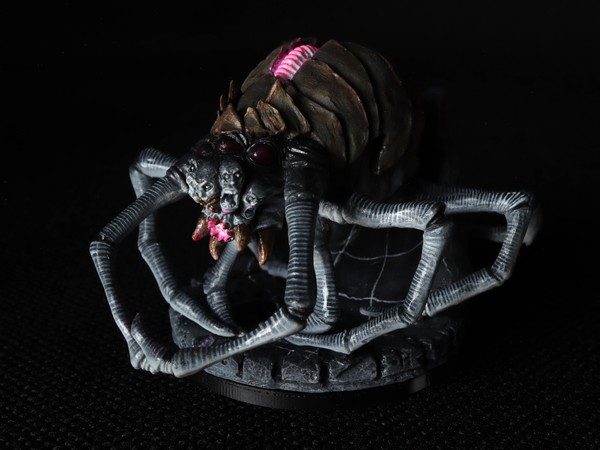
A weak concept: One third a tick, one third a spider, and one sixth a set of human heads. That doesn’t leave a lot of room for greatness.
The King in Yellow
Sculptor: Chaz Elliott.
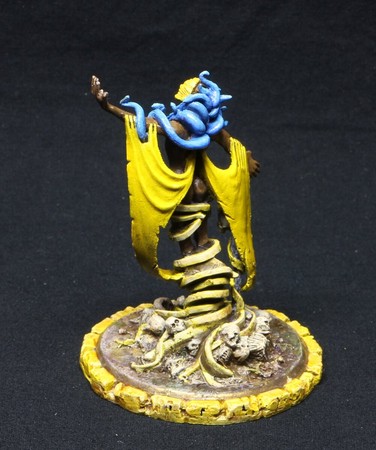
From the Yellow Sign, it’s the King of Madness. Elegant and beautiful, this model really stands out in the game, but the production departs quite a lot from the original design by Richard Luong. This guy would have been more fun in modern high-fidelity HIPS with Luong’s gnarly piercings intact.
The Unmen
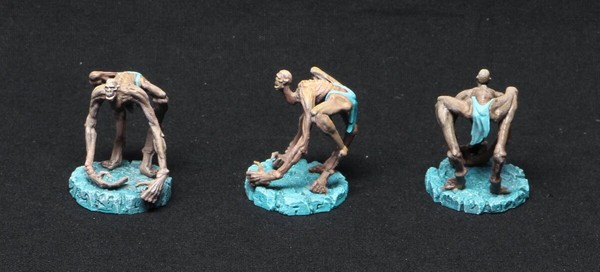
From the Ancients, it’s arguably the most Lovecraftian of all the models in the game. Recognizably human but horribly degenerate in their finely rendered anatomy.
The Hound of Tindalos
Sculptor: Tidal 4.
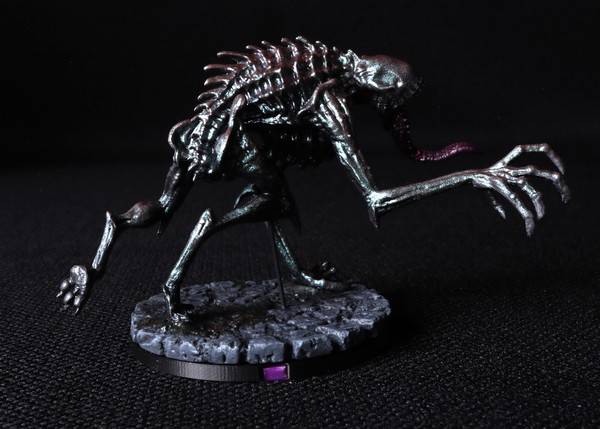
This feels like it’s not to scale, and it doesn’t stand well, so I added a thin brass rod as a fifth leg. Hounds’re supposed to have a blue proboscis, but it sure looks like a tongue to me, so that’s how I painted it. Too much of an Alien (1979) knock-off.
The Cats from Mars
Sculptor: Sarah Dahlinger.
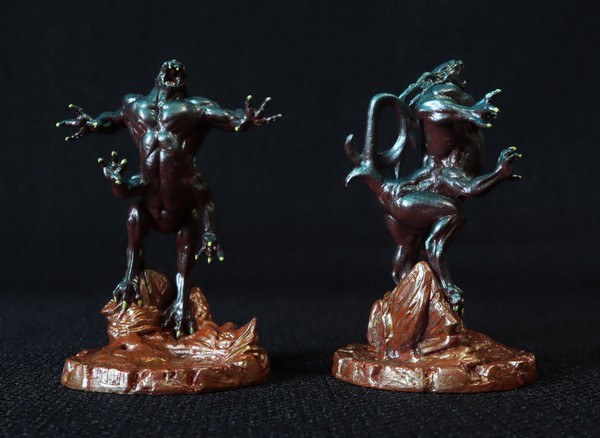
Dahlinger’s only credited contribution is half cat, half John Carter (2012).
The Protoshoggoths
Sculptor: Tim Prow.
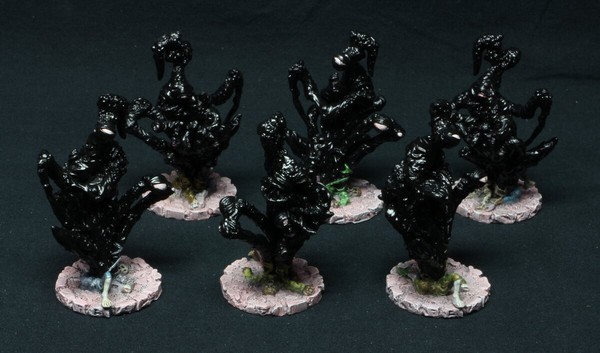
From the Tcho-Tcho, it’s a sexier shoggoth coming out of its victim, the way they do in the Antarctic murals of At the Mountains of Madness (1936).
Bokrug
Sculptor: Jo Brumby.
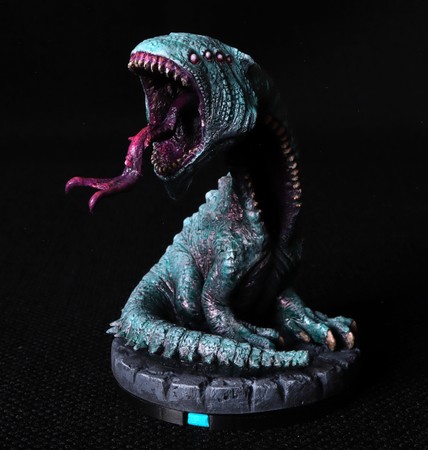
A generic, primary-school-doodle concept for a monster, but Brumby pulled it off.
The Cats from Saturn
Sculptor: Valerio Carbone.
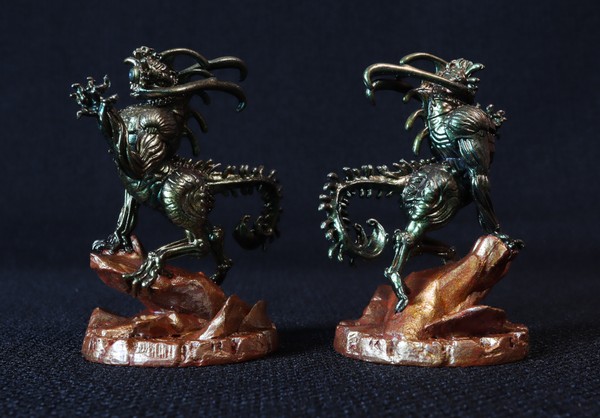
Frilly yet elegant, they’re as whimsical as Lovecraft’s Dreamlands without being comic relief.
The Ghasts
Sculptors: Jo Brumby, Stephen May.
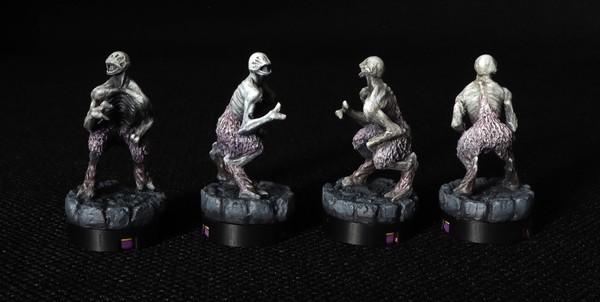
Not a star design, but subtle and versatile without looking too generic.
The Spawn of Yog-Sothoth
Sculptor: Tim Prow.
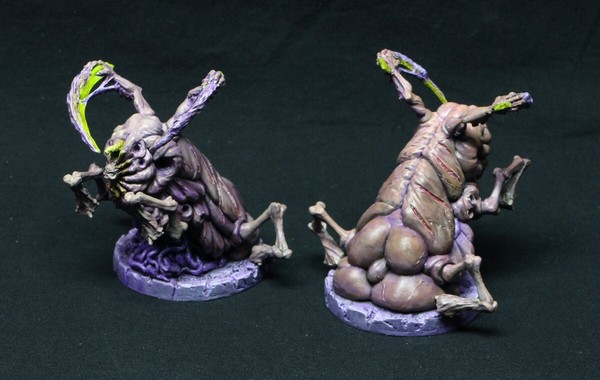
From the Opener of the Way, it’s... what is that? Five ass cheeks? Scything blades that can barely reach the ground if the monster lays flat on its belly? It’s a comical figure, but I like it.
The Bloated Woman
Sculptor: Tidal 4.
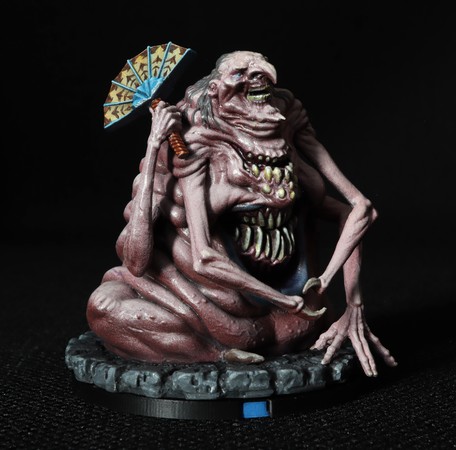
She really needs the fan, but with the fan she’s OK. Could have used some clothing too, and one fewer mouth.
Tsathoggua
Sculptor: Jason Wiebe.
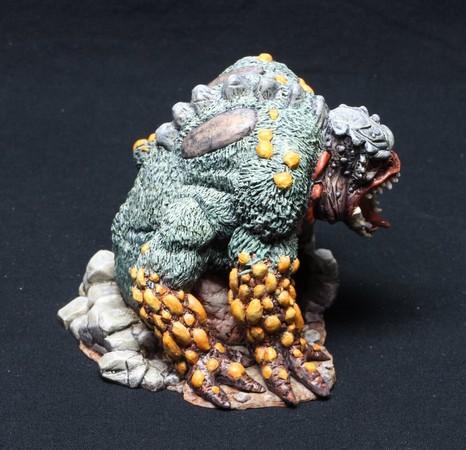
From the Sleeper, it’s the eponymous Hairy Toad. Designer Richard Luong married many opposites in this design, and it still bothers me that the upper and lower jaws don’t match up.
The Wendigo
Sculptor: Gary Morley.
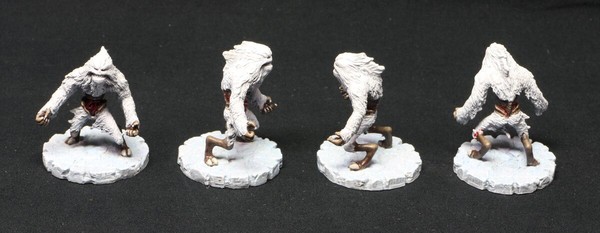
From the Windwalker, it’s a model that reminds me of the phagors of Helliconia Winter (1985), if they skipped leg day and were perpetually squinting.
The Serpent Men — and, I assume, women
Sculptor: Tim Prow.
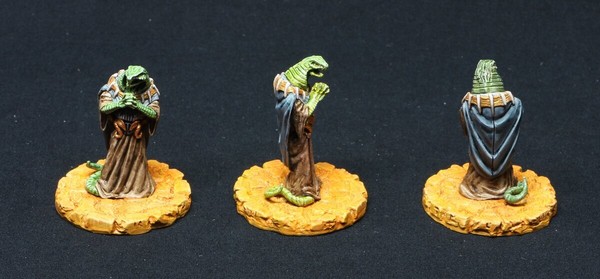
From the Sleeper, it’s generic anthropomorphic snake wizards. I like the way their pose is just a little off balance.
The Moonbeasts
Sculptor: Sonny Bundgaard.
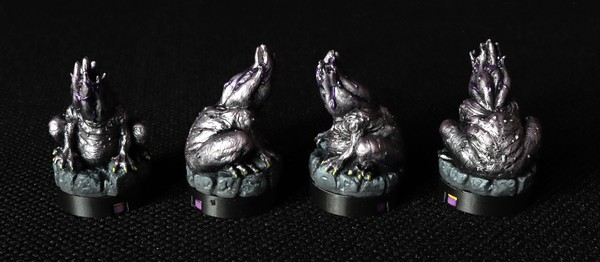
Plump and refreshingly simple. A shame they’re banned from the Moon.
The faction-specific Great Cthulhu Acolyte
Sculptor: Tidal 4.
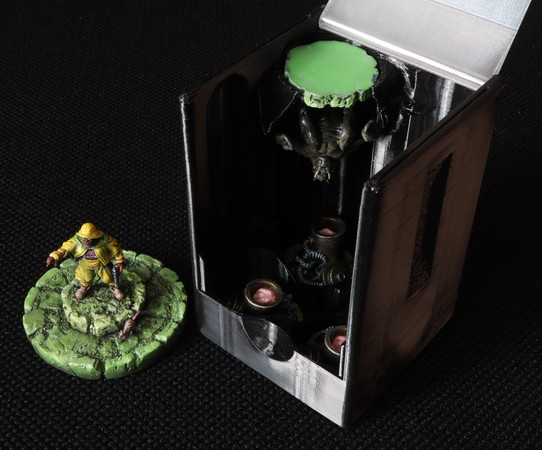
Bonus addon box of my own design.
The traditional oilskin watchcoat is magnificent, and the bulging Deep One eyes tell a story too.
The Wizards
Sculptor: Tim Prow.
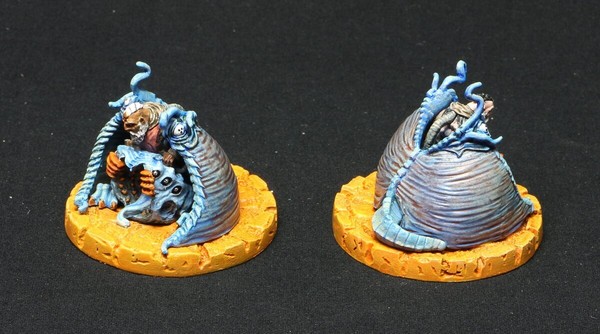
From the Sleeper, it’s a flawed design. Luong’s concept of the regular human body merging with the monster is cool, but with the elevated spine, you can’t really tell that’s what’s happening. Instead, the features in the front that I have painted orange look like waldo’d hands holding open a big vagina dentata. On the other hand, I like the fact that the human looks comfortably dressed, as an antisocial Lovecraftian wizard should be.
Bastet
Sculpt not credited.
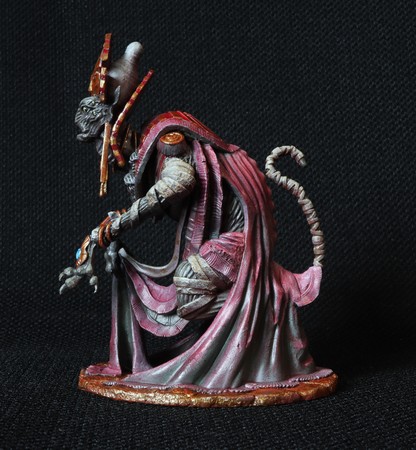
The centrepiece of the Bubastis faction is a large anthropomorphic cat with stereotypical Ancient Egyptian attributes, sold without a base to stand on. I added the base pictured here.
The Flying Polyps
Sculptor: Neil McKenzie.
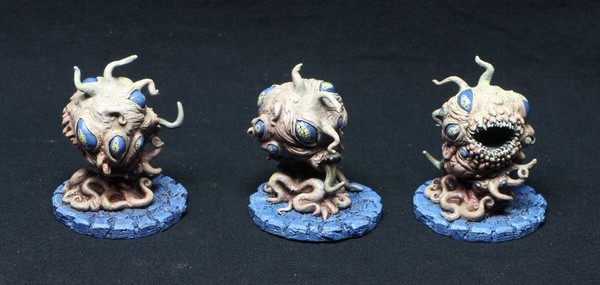
From the Crawling Chaos, it’s the popular image of Lovecraftian monsters as a nonsensical mess of features from real anatomy. Fortunately, the eyes aren’t spherical like human eyes.
The faction-specific Windwalker Acolyte
Sculptor: Tidal 4.
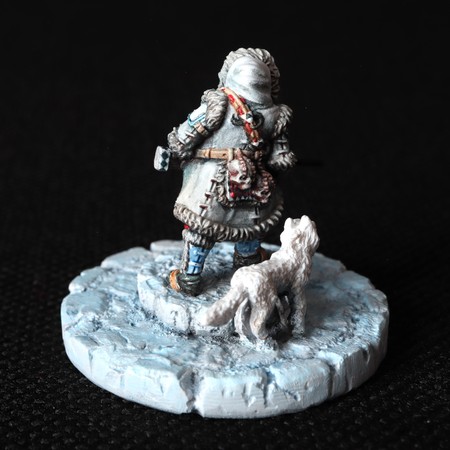
All of my six copies of this figure had a bent gun barrel. Freudian symbolism aside, that’s a problem with design for manufacture. The one in this photo has a brass barrel, which was an easy fix. I like the traditional Arctic visor thingy on its face.
Thesis
Sculptor: Taras Strannik.
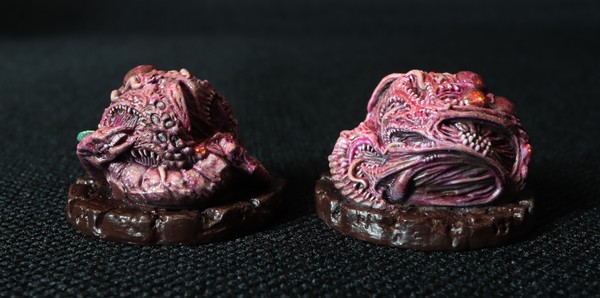
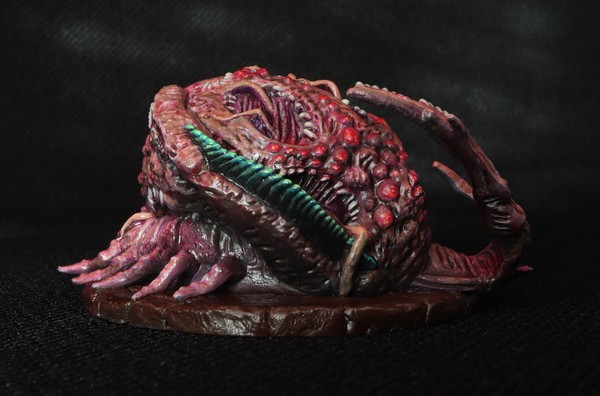
These two sculpts have the same problem as the Flying Polyps, plus you could go very googly-eyed painting these if you wanted, but with the right grossness, they’re OK.
The faction-specific Yellow Sign Acolyte
Sculptor: Tidal 4.
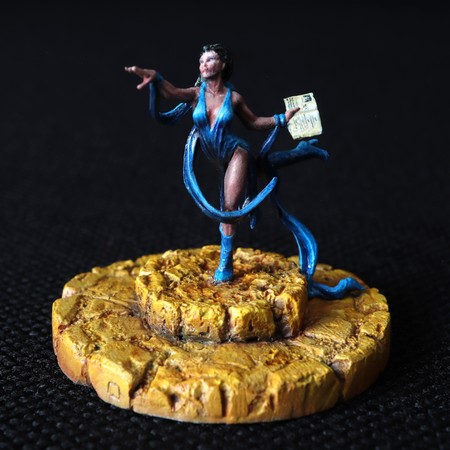
Too many arts in one figure, but it looks graceful enough, and yet it survives the production process better than I’d have expected.
Nyogtha
Sculptor: Andrew May.
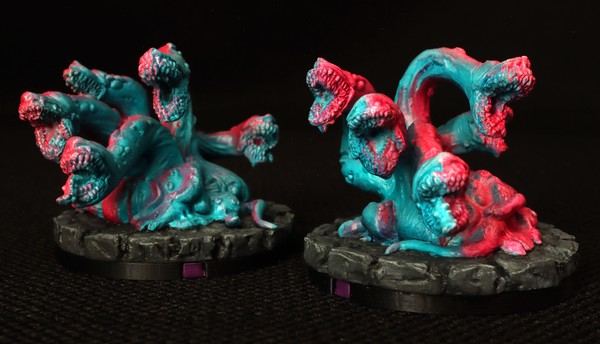
Two figures for one Great Old One, using one sculpt: A generic hydra with some perfunctory tentacles added on in place of legs.
The Hunting Horrors
Sculptor: Jo Brumby.
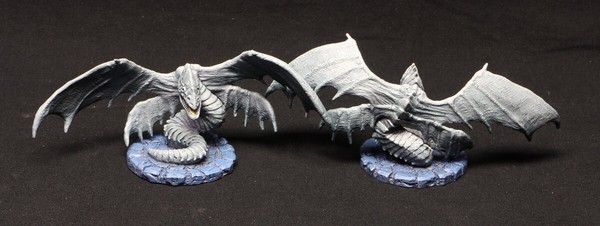
From the Crawling Chaos, it’s a serviceable Chinese-style dragon.
The Shoggoths
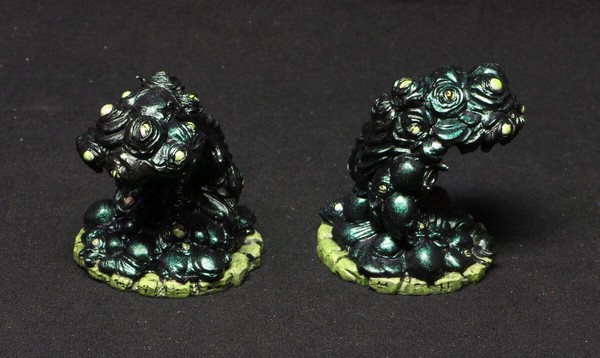
From Great Cthulhu, it’s one of the most famous of Lovecraft’s creations, but making the shape of a crashing wave for some reason, instead of having temporary tools for the job.
Cthulhu
Sculptor: Jo Brumby.
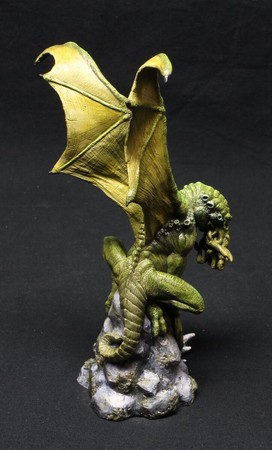
From Great Cthulhu, it’s the Thing Itself. This rendering is essentially faithful to Lovecraft’s description but veers toward the human form. A lot of the detail work is good, particularly the hands, but the overall impression is barnacles and bat wings on a guy on a rock.
The Dimensional Shamblers
Sculptor: Tim Prow.
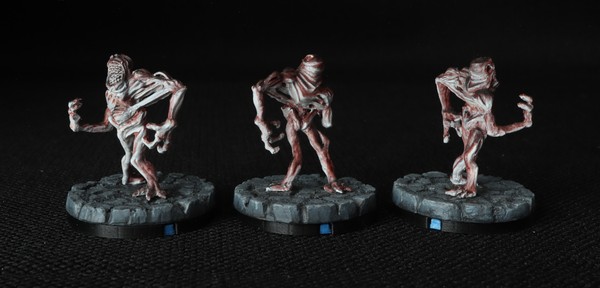
Prow threw design for manufacture overboard here and went for a distinctive silhouette. I can respect that, but the mouths don’t work.
The Ghouls
Sculptor: Mark Evans.
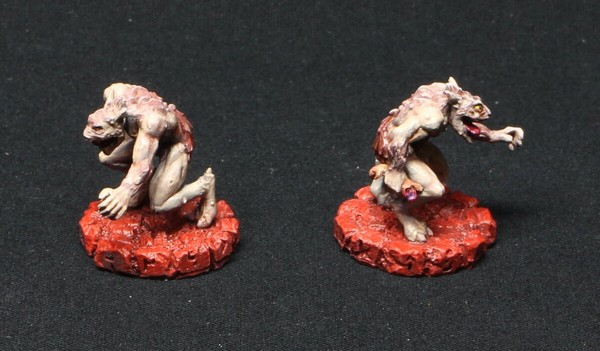
From the Black Goat, it’s the animalistic version of Lovecraft’s ghouls from “The Rats in the Walls” (1924). I would have preferred a more civilized ghoul; perhaps a less distended Unman in a suit.
The Yothans
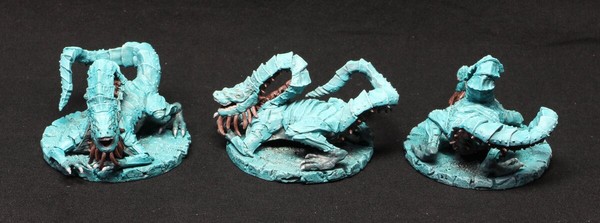
From the Ancients, it’s another serviceable Chinese-style dragon. The 12 eyes are nice, but the rest looks generic.
Ubbo-Sathla
Sculptor: Peder Bartholdy.
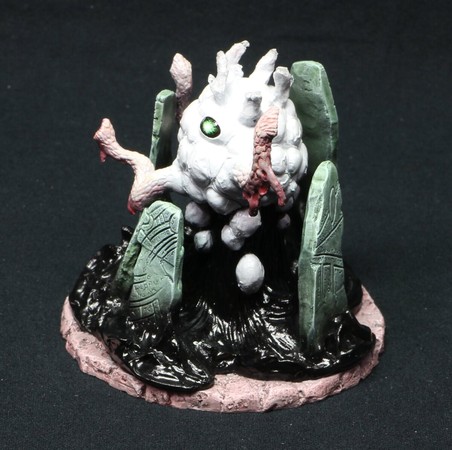
From the Tcho-Tcho, it’s the very source of life on Earth. I wish it didn’t have an eye like Byatis, and I don’t know what Smith was thinking with those stone tablets. Probably Christian thoughts.
The faction-specific Sleeper Acolyte
Sculptor: Tidal 4.
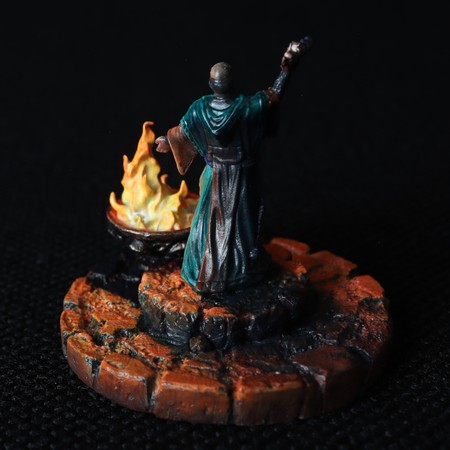
The look is very mid-20th-century B movie, but it works. As a modder I appreciate that this comes bald like the Crawling Chaos Acolyte, so you can add hair for variation.
The Elder Things
Sculptor: Andrew May.
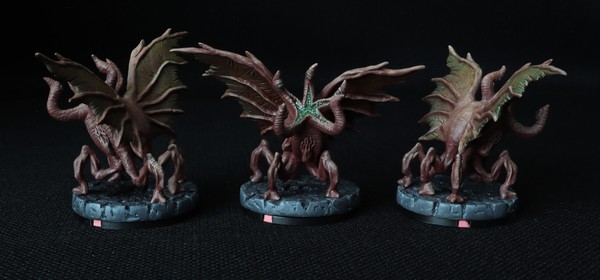
Lovecraft provided an unusually precise anatomical description to work off of here, and May did OK with it, but it does not give me any sense of the intelligence or nobility of the lost species.
The Wamps
Sculptor: Tidal 4.
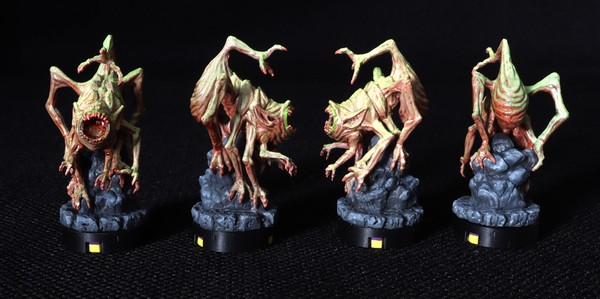
There’s some personality here at least.
The faction-specific Crawling Chaos Acolyte
Sculptor: Tidal 4.
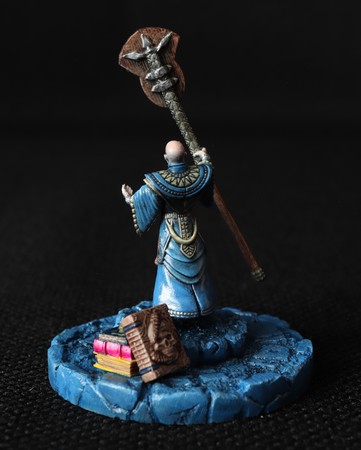
Out of all my six copies of this figure, the one in this picture is the only one with a straight pole. That’s not a sex joke; it’s poor design for manufacture. The design is otherwise effective, especially for my use as a High Priest.
Mother Hydra
Sculptor: Gary Morley.
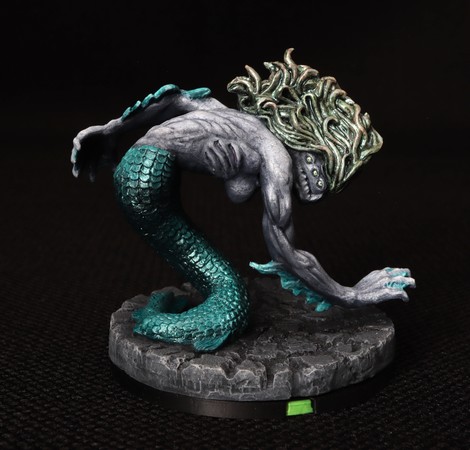
This is definitely the best of Brumby and Morley’s family of Deep One figures, but it’s also a mediocre mermaid.
The Byakhee
Sculptor: Stephen May.
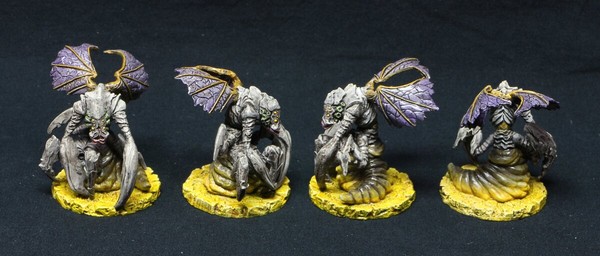
From the Yellow Sign, it’s a bunch of perfunctory insectile features. Not quite worthy of Lovecraft’s vague description, but not bad by any means.
The Shadow Pharaoh
Sculptor: Tidal 4.
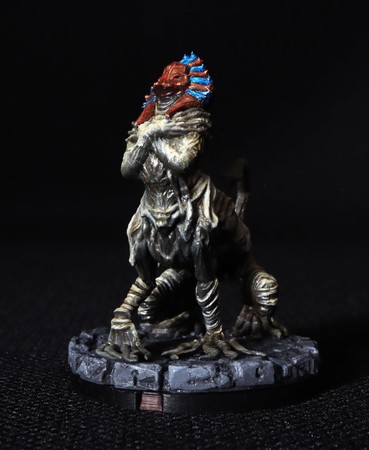
A four-legged mummy without much personality.
The faction-specific Black Goat Acolyte
Sculptor: Tidal 4.
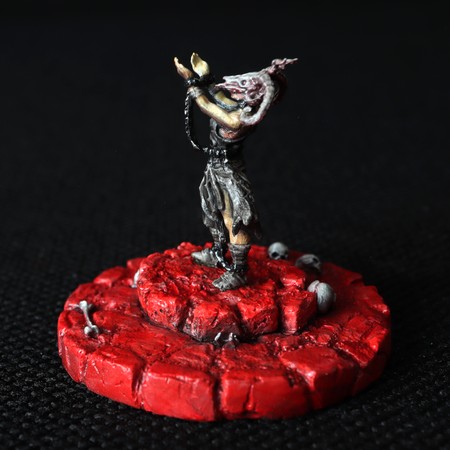
This one works somewhat poorly in the role I’ve given it as a high priest, but that’s on me. As an acolyte, it’s great.
The High Priests of the Tcho-Tcho
Sculptor: Yann Hoaru.
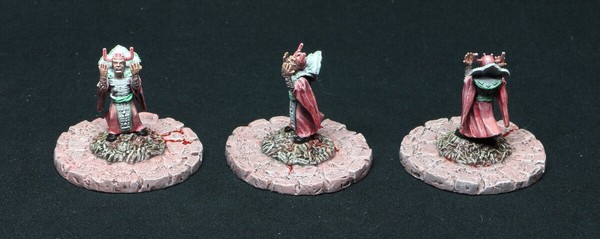
From the Tcho-Tcho and specific to them, it’s a design that just oozes mid-century Z-list horror and exploitation cinema, of a kind that Sandy Petersen loves.
Note: The faction-specific Acolyte sculpt, by Tim Prow, is in a matching style and quality. It’s not shown on this page because I haven’t painted it. For the same reason, none of the generic High Priests are included on this page.
The Undead
Sculptor: Stephen May.
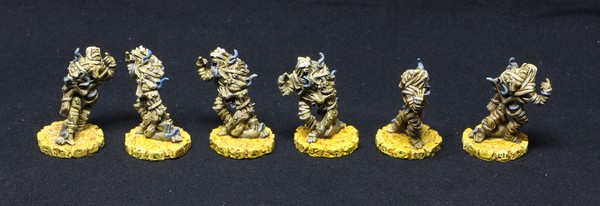
From the Yellow Sign, it’s the admixture of a classic mummy-horror design into a Lovecraftian blob with a whiff of “Cool Air” (1928). This one could have used more definition.
The Nightghaunts
Sculptors: Jo Brumby, Mark Evans.
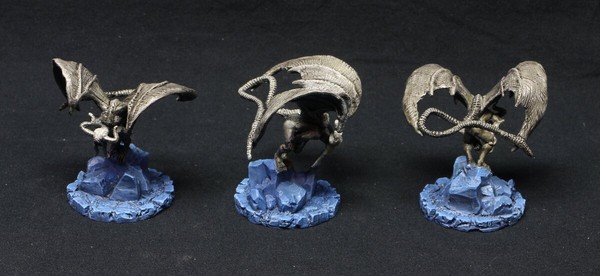
From the Crawling Chaos, it’s Gothic/Satanic horror. The pose is nice, but the anatomy doesn’t speak to me.
The generic Acolytes
Sculptor: Stephen May.
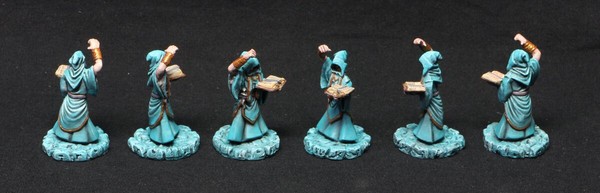
Ancients
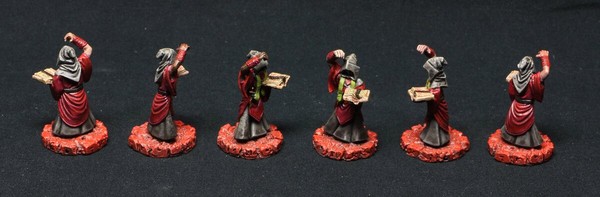
Black Goat
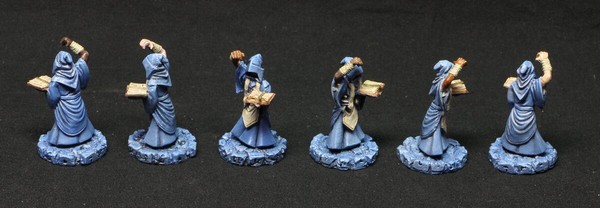
Crawling Chaos
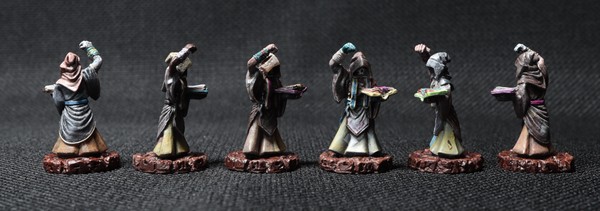
Demon Sultan, though the faction does not ship with these
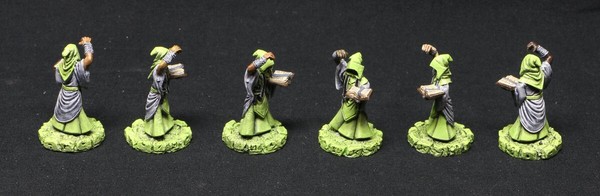
Great Cthulhu
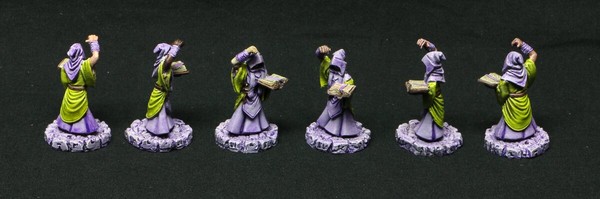
Opener of the Way
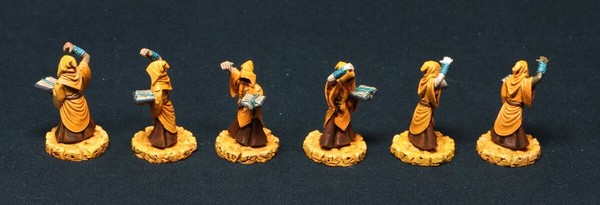
Sleeper
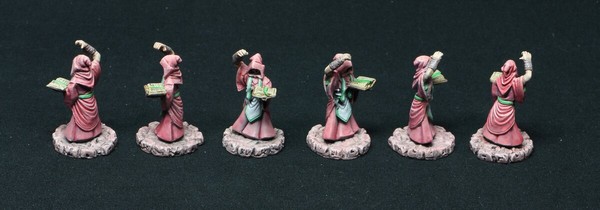
Tcho-Tcho
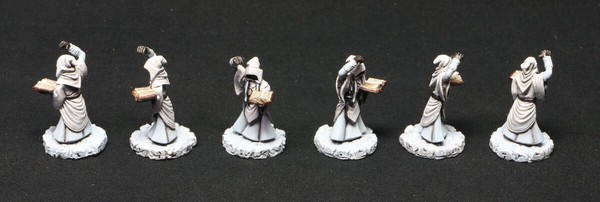
Windwalker
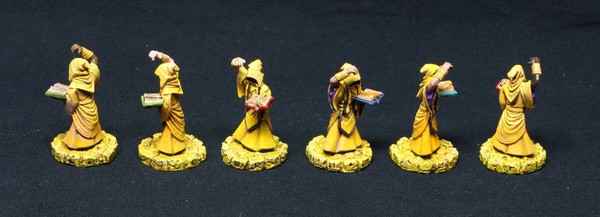
Yellow Sign
Having painted all 60 of these, I am intimately familiar with the orientalism of the wavy dagger, the vagueness of how the robe fits together, the frequently broken left hand and the poor definition of the pages of the book. It’s not pretty, but it’s functional: The raised arm gives it a unique silhouette, it’s easy to grab, and all the parts are thick enough to be robust where the faction-specific Acolyte sculpts are sometimes too thin to retain their shape after PVC injection moulding.
The faction-specific Daemon Sultan Acolyte
Sculpt not credited.
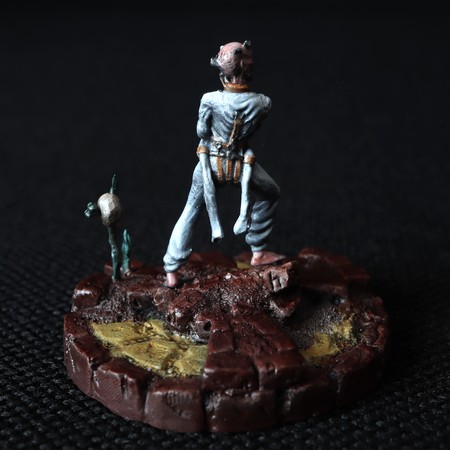
Seen from the rear.
I believe this was reused from another game, called Evil High Priest. Before I converted it, it was a man in the straitjacket, holding a wizard’s staff without using its hands, while still being restrained. That doesn’t make sense, and the figure’s legs are too thin to survice PVC injection moulding without bending, so none of my six copies could stand straight.
The Gugs
Sculptor: Jo Brumby.

I went with an eye-catching paint job here, and I think you have to. Bear-like colouring would not work for this bear-like creature.
The Earth Cats
Sculptor: Derran Viss.
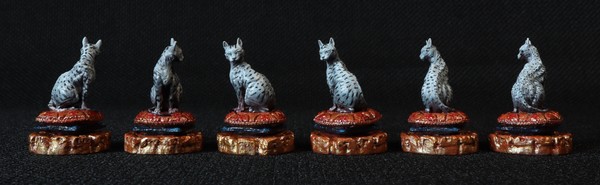
A weak concept, competently executed.
The Servitors of the Outer Gods
Sculptor: Stephen May.
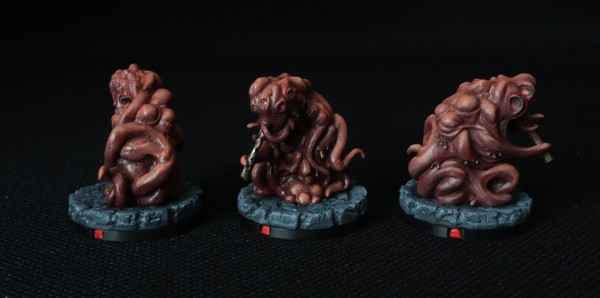
Goopy flutists.
The Mutants
Sculptors: Sonny Bundgaard, Stephen May.
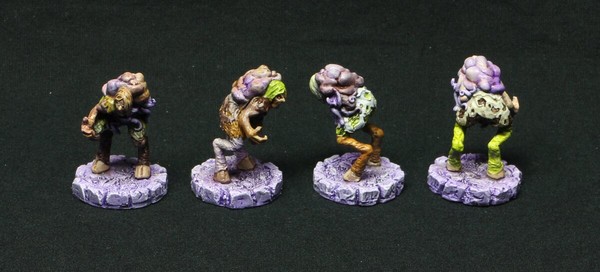
From the Opener of the Way, it’s hillbilly satyrs with stage-nineteen cancer. This is one case where I think it would have made sense to arm the sculpt, but instead, it’s missing an arm.
The Chaos Gates
Sculptor: Taras Strannik.
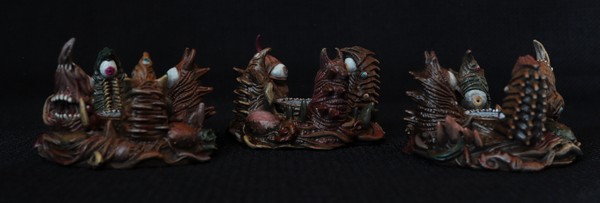
This sculpt is listed under the name “Daemon Gate” in the sculpting credits of the O4 rulebook. I’ve seen other painters go for highly contrasting, highly saturated demonic colour schemes with them, and that could probably look good. I would have preferred a different sort of sculpt, even more like a “possessed” version of a normal Gate, without the huge eyes facing inward.
Gobogeg
Sculptor: Jo Brumby.
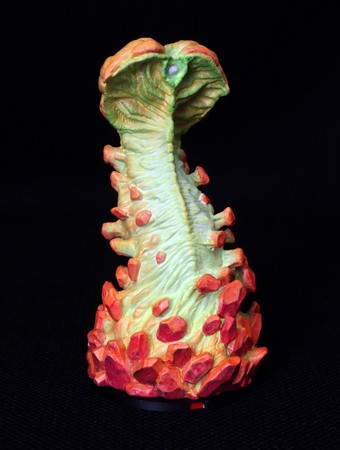
In the hands of a better painter, I think this could look imposing, but it’s inescapably phallic.
The faction-specific Opener of the Way Acolyte
Sculptor: Robert Goldney.
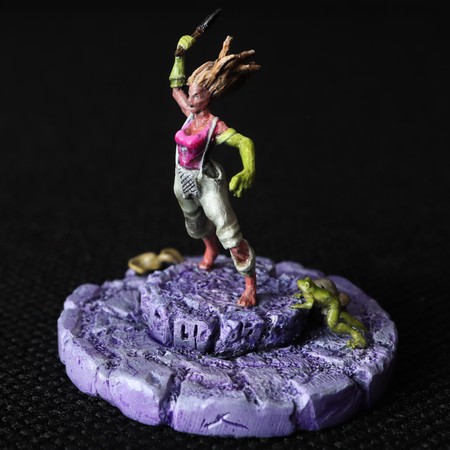
Apparently a 19th-century farmer. Like the Black Goat Acolyte, this one works somewhat poorly in the role I’ve given it as a high priest, and better as an acolyte.
Cthugha
Sculptor: Yann Hoaru.
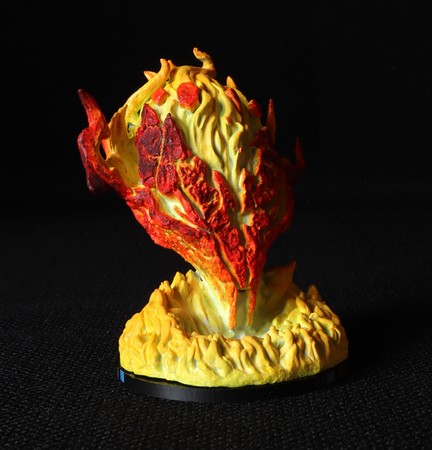
A familiar problem: The floating helmet of slag adds too much anthropomorphism.
Yig
Sculptor: Ed Fortae.
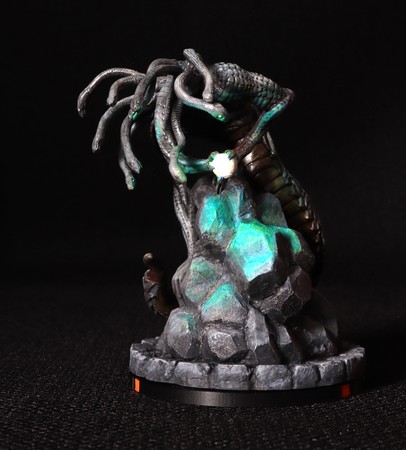
Replacing the head of a human with a whole bundle of snakes does not solve the problem of anthropomorphism in Mythos art, but the figure is nicely balanced in its dynamism.
The Shantaks
Sculptor: Jo Brumby.
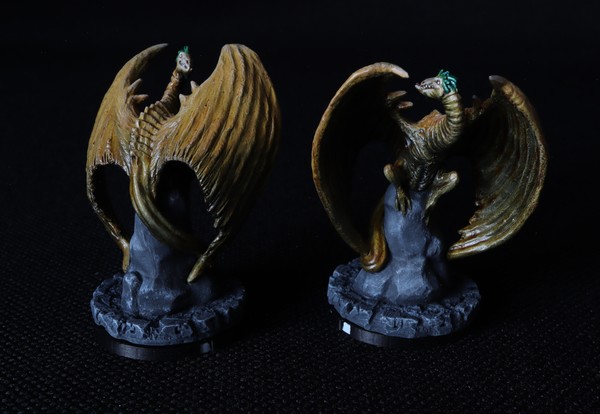
Very gargoyley.
Tulzscha
Sculptor: Tim Prow.
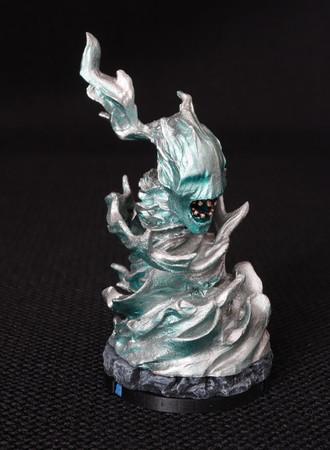
Like Cthugha, it’s too anthropmorphized to look like the “green flame” that is Tulzscha’s nickname.
The Dark Demons
Sculptor: Tidal 4.
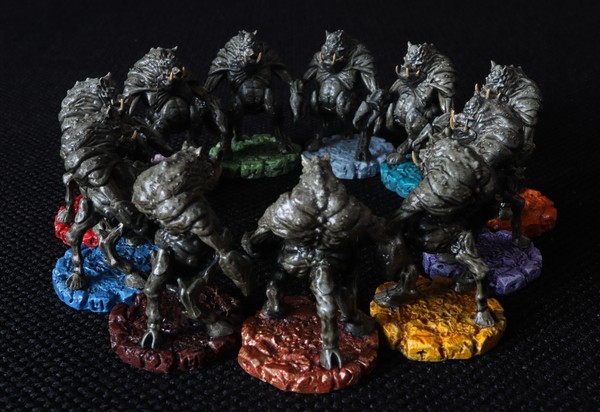
Such a static pose.
Father Dagon
Sculptor: Gary Morley.
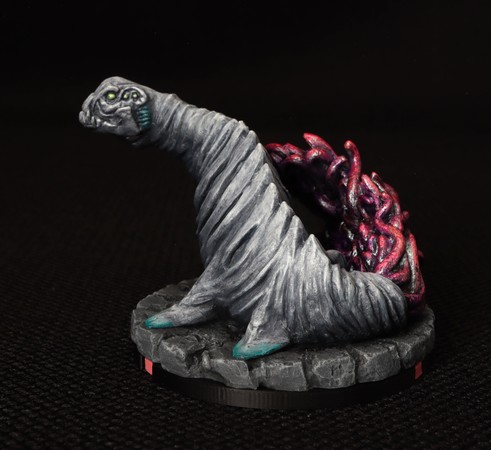
The core concept, combining two very different types of marine creatures with six-eyed weirdness, could have worked, but this looks too clumsy even in water.
The Cathedrals
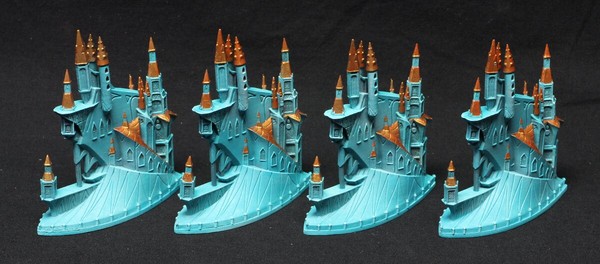
From the Ancients, it’s Cinderella’s castle.
The Deep Ones
Sculptor: Jo Brumby.
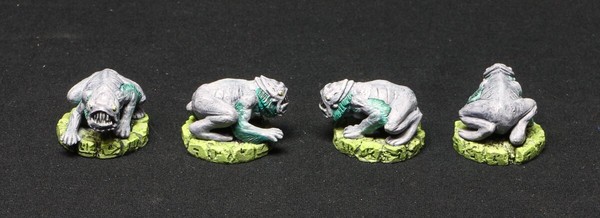
From Great Cthulhu, it’s a fish person, and I’m no Troy McClure. These little guys don’t even have the weirdness of Father Dagon, but at least they’re visually distinct, being so low to the ground.
The Gnorri
Sculptor: Tim Prow.
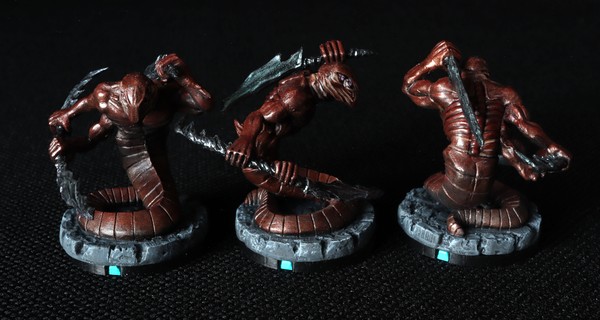
Snake men with bat'leths.
Chaugnar Faugn
Sculptor: Yann Hoaru.
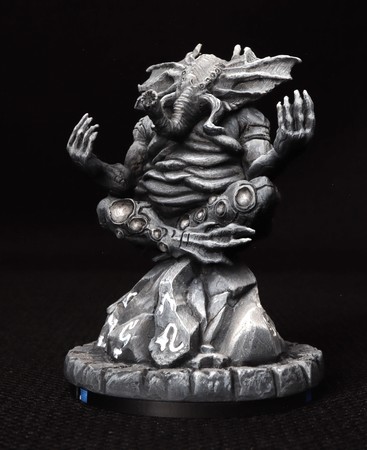
Frank Belknap Long’s literary concept was bad enough. I don’t know why it’s mashed up with Hindu art for the game, and I wish it wasn’t.
The Vooniths
Sculptor: Tidal 4.
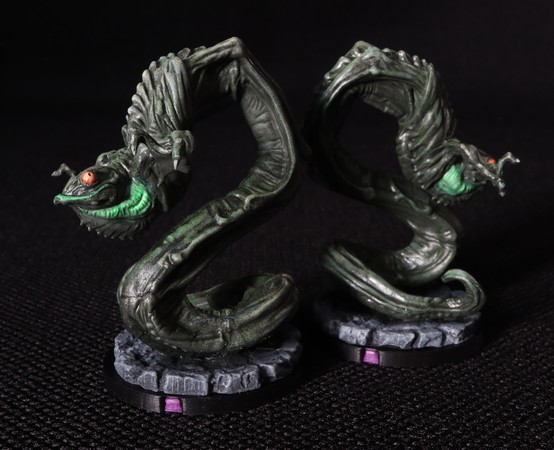
These could have come out of any crappy Dungeons & Dragons model kit.
The Starspawn
Sculptor: Jo Brumby.
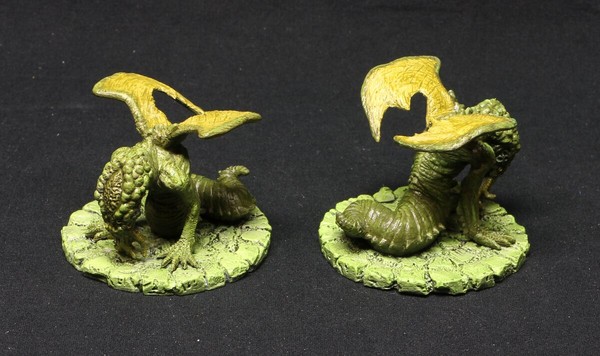
From Great Cthulhu, it’s the runt of the litter. These are my least favourite models in the game. They look barely able to move under any circumstances, and they’re not quite similar enough to their kin in Cthulhu Itself, despite the fact that Brumby did both.